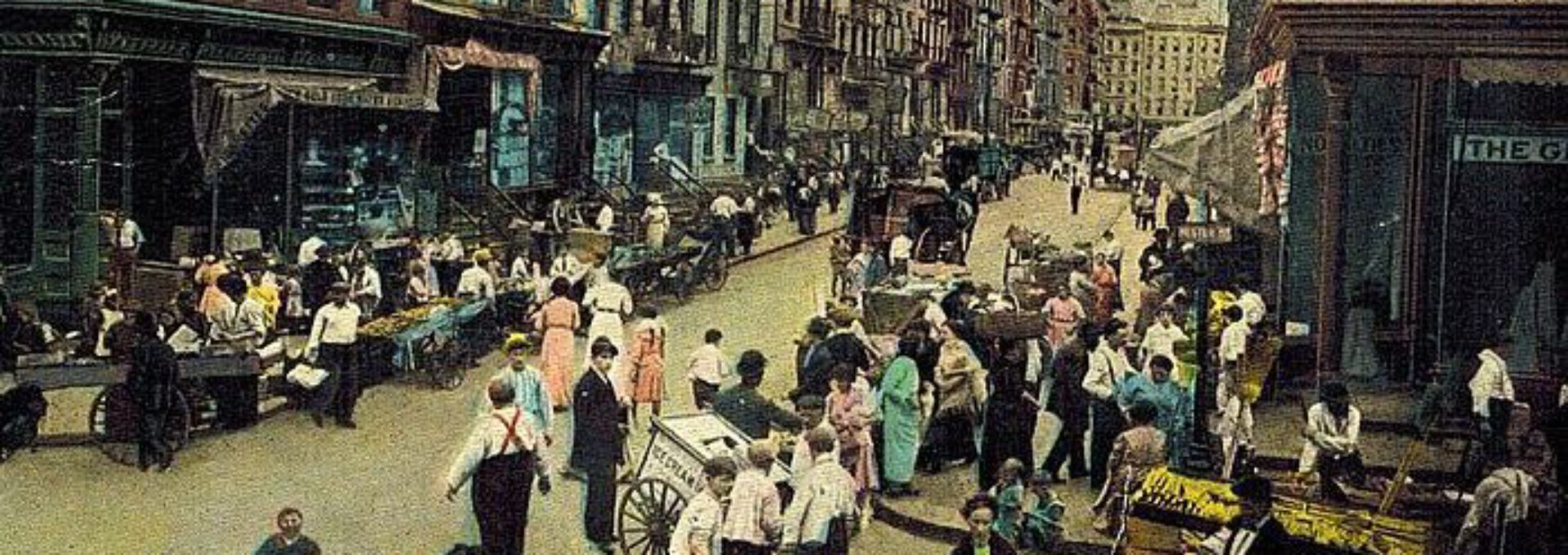
Short on time? The Lower East Side is one of the few New York City neighborhoods where visitors can experience more than two centuries of history within just a few blocks. Even if you only have two hours, you can explore immigrant landmarks, historic streets, iconic food destinations, and some of the most important sites in New York history.
Here’s how to make the most of a two-hour visit.
Stop 1: Katz’s Delicatessen
Begin at Katz’s Delicatessen, one of New York City’s most famous restaurants.
Founded in 1888, Katz’s remains a living piece of Lower East Side history. The restaurant has served generations of New Yorkers and visitors while witnessing enormous changes in the surrounding neighborhood.
Even if you don’t stop for a full meal, it’s worth stepping inside to experience one of the city’s most iconic institutions.
Stop 2: Walk Orchard Street
From Katz’s, head toward Orchard Street.
During the late nineteenth and early twentieth centuries, Orchard Street became one of the most important shopping districts in immigrant New York. Jewish, Italian, and other immigrant families operated businesses that attracted customers from across the city.
Today, many of the historic buildings remain, providing a glimpse into the neighborhood’s past.
Stop 3: View Historic Tenement Buildings
As you walk through the neighborhood, pay attention to the architecture.
The Lower East Side contains one of the largest concentrations of historic tenement housing in the United States. These buildings housed generations of immigrants who arrived seeking opportunity and a better life.
The narrow lots, fire escapes, and brick facades tell an important part of the neighborhood’s story.
Stop 4: Visit the Tenement Museum Area
Even if you don’t have time for a full museum tour, the area surrounding the Tenement Museum offers valuable historical context.
The streets nearby provide a sense of what immigrant New York looked like during the neighborhood’s most densely populated era.
Many visitors find that simply walking these blocks helps bring history to life.
Stop 5: Explore East Broadway
East Broadway was once one of the most important streets in Jewish New York.
The area contains buildings connected to religious, educational, cultural, and political organizations that helped shape immigrant life in America.
Today, visitors can observe layers of history reflecting multiple communities that have called the neighborhood home.
Stop 6: Visit the Museum at Eldridge Street
The Eldridge Street Synagogue stands among the most significant surviving landmarks of Jewish immigrant history in the United States.
Its impressive architecture and restoration make it one of the Lower East Side’s most rewarding destinations.
Even a brief visit provides insight into the aspirations and achievements of the immigrant community that built it.
Stop 7: Walk Through Seward Park
Opened in 1903, Seward Park became New York City’s first permanent municipal playground.
The park reflects efforts to improve living conditions in crowded immigrant neighborhoods and remains an important community space today.
It’s an ideal place for a short break during your visit.
Stop 8: Browse Essex Market
End your tour at Essex Market.
The market’s origins can be traced to the pushcart vendors who once filled neighborhood streets. Today, it offers food, culture, and a direct connection to the entrepreneurial traditions that helped define the Lower East Side.
Visitors can grab a snack while reflecting on the neighborhood’s remarkable history.
Why Two Hours Isn’t Enough
While it’s possible to see many important landmarks in two hours, the Lower East Side rewards deeper exploration.
Every block contains stories connected to immigration, labor, religion, activism, architecture, and urban change. The more time you spend here, the more connections you’ll discover.
For visitors who want to go beyond the guidebooks and understand the people behind the buildings, a guided walking tour offers a far richer experience.
Interested in exploring the Lower East Side with an expert guide? Book a tour with Lower East Side History Project.