Summary
The New York Ice Trust scandal of 1900 began when the American Ice Company sharply raised prices, reduced household deliveries and stopped selling the smallest, cheapest pieces of ice. The changes caused particular hardship in New York’s crowded tenement districts, where families depended on affordable ice to preserve food and keep milk safe for infants.
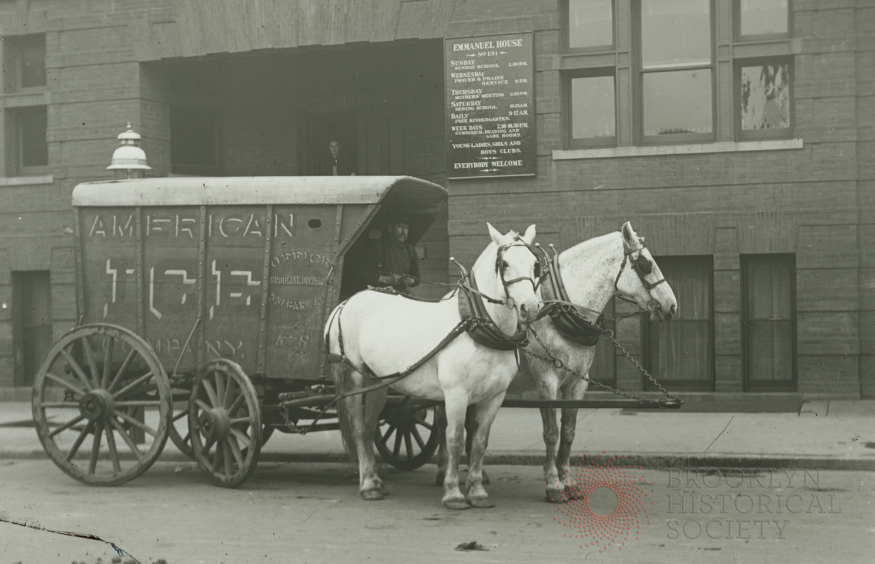
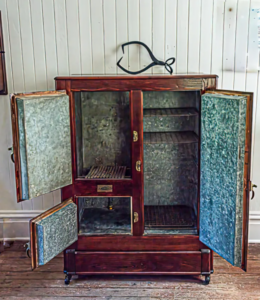
Today, ice is produced automatically inside refrigerators. In 1900, it was part of the city’s basic food system. Families placed blocks of ice inside insulated wooden cabinets known as iceboxes. The block slowly melted while keeping milk, meat and other perishable foods cool. During warm weather, it had to be replaced constantly.
A household that could not afford ice had few ways to keep food from spoiling.
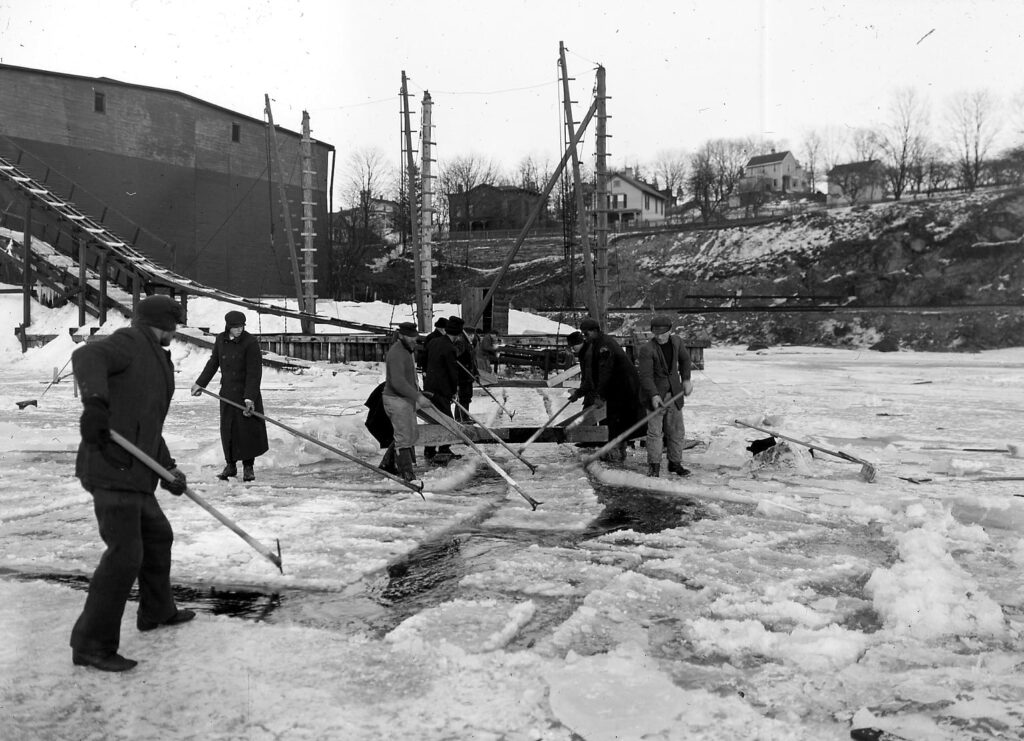
New York consumed roughly four million tons of ice each year. Most of it came from natural sources. Workers cut great blocks from the frozen Hudson River and from rivers and lakes in Maine. The ice was packed in sawdust, stored inside enormous icehouses and shipped to the city by barge or rail when the weather turned warm.
Manufactured ice was becoming available, but it still supplied only a small portion of the market. New York remained dependent on a complicated system of winter harvesting, storage, transportation, waterfront access and neighborhood delivery.
Anyone who controlled that system controlled a necessity, and a man named Charles W. Morse understood that.
Building the Ice Trust
Morse was a Maine businessman who became known as the “Ice King.” During the late 1890s, he began bringing competing ice businesses under his control.
In 1899, the Consolidated Ice Company, which supplied much of New York, combined with the Knickerbocker Ice Company and other interests to form the American Ice Company. The corporation soon controlled a large share of the ice sold in New York and several other eastern cities.
Its power did not come only from owning frozen water. American Ice controlled icehouses, barges, delivery wagons, equipment and valuable waterfront facilities. It also obtained agreements preventing some business owners who sold their companies from returning to the ice trade.
An independent dealer could not compete simply by finding a frozen lake. Ice had to be harvested, stored and transported. Once it reached New York, it had to be unloaded at a dock and moved through a network of wholesalers and neighborhood delivery routes.
Access to Manhattan’s waterfront was therefore crucial. Much of the suitable waterfront property was controlled by the city. Officials who granted docking privileges could determine which companies had an opportunity to compete and which did not.
This was where the American Ice Company’s growing business power became entangled with Tammany Hall, the political organization that dominated New York’s government.
That relationship would turn an unpopular price increase into one of the city’s most notorious scandals.
The Price of Ice Soars
In April 1900, American Ice announced a dramatic increase in prices.
Large commercial customers had been paying about 15 cents per hundred pounds. Their price rose to roughly 25 cents. Small household customers had paid about 25 cents per hundred pounds. Their price increased to as much as 60 cents.
The people buying the smallest amounts were being charged the highest rate.
American Ice also announced that household deliveries would be reduced. Instead of receiving ice every day, customers would receive deliveries only three times a week. Many household iceboxes could not hold enough ice to last through the gaps, particularly during hot weather.
The company then stopped selling five-cent and ten-cent pieces.
This decision struck directly at working-class families. A wealthy household might purchase a large block and place it inside a substantial icebox. A hotel, butcher or restaurant could order ice in bulk. Many tenement residents could do neither.
They bought only the amount they needed for the day, often from a neighborhood vendor who chopped pieces from a larger block. Five or ten cents might purchase enough ice to keep milk or food cool for a few hours.
Eliminating those small portions threatened to place ice beyond the reach of the poorest New Yorkers.
American Ice blamed the increase on a limited supply and warnings of a possible “ice famine.” The natural harvest from the Hudson River had been lower than usual, but contemporary trade publications challenged the suggestion that the city was facing a true emergency.
The previous year had produced an unusually large crop. Ice could also be shipped from Maine, while artificial-ice plants were capable of increasing production.
The largest price increases appeared in cities where American Ice exercised the greatest control. Prices did not rise as sharply in places where the company faced meaningful competition.
To many New Yorkers, the alleged famine looked less like a natural disaster and more like an excuse.
Life Inside the Tenements
The price increase was especially cruel in the crowded tenement districts of the Lower East Side and other lower-income neighborhoods throughout the city.
Families lived in small apartments that became stifling during the summer. Many rooms had poor ventilation. Interior bedrooms might have no outside windows, while narrow air shafts provided little relief. Several people often shared rooms designed for far fewer occupants.
There were no electric refrigerators. Food bought in the morning could spoil before the end of the day. Milk was particularly difficult to keep safe.
A contemporary newspaper account described ice vendors throughout the crowded East Side streets. Some operated from small stores, while others pushed carts carrying blocks that were chopped into household portions. Women waited with pans, pitchers or other containers. Children followed the wagons and gathered fragments that broke off onto the street.
Ice was not a luxury in these neighborhoods. It was purchased in nickels and dimes because that was what families could afford.
Raising the price from 25 cents to as much as 60 cents per hundred pounds was not a minor inconvenience. It forced families to choose between ice and other necessities. Money spent keeping milk or meat cool could not be used for rent, bread, coal or clothing.
Going without ice brought its own cost. Food spoiled more quickly, forcing families either to throw it away or risk eating it. For households already stretching every dollar, throwing away food was not a simple decision.
The Danger to Infants
The loss of affordable ice was especially dangerous for infants.
At the turn of the twentieth century, unsafe milk was a major public-health problem in New York. Milk traveled long distances from farms to the city, often under unsanitary conditions and without continuous refrigeration. It could be contaminated at the farm, during transportation or while sitting exposed in stores and tenement apartments.
Warm weather accelerated spoilage and bacterial growth. Infants who depended on cow’s milk were especially vulnerable to diarrheal diseases and other infections. During the summer, deaths among babies and young children rose sharply.
Even milk that had been pasteurized still had to be kept cool after it reached the household. In a hot tenement apartment, a mother without enough ice might have no reliable way to preserve milk between feedings.
The Ice Trust did not create New York’s infant-mortality crisis. Poor sanitation, contaminated milk, overcrowding and inadequate medical care were already killing children. But making ice more expensive placed another obstacle between tenement families and a safe food supply.
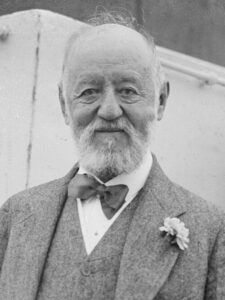
Nathan Straus, the department-store owner and philanthropist, had already recognized the deadly connection between unsafe milk and infant mortality. Beginning in the early 1890s, Straus used his own money to establish facilities that pasteurized milk and distributed it through depots in working-class neighborhoods.
His first milk depot opened in 1893 at the Third Street Recreation Pier on the East River. A laboratory on Avenue C helped prepare and test pasteurized milk for distribution. Families could purchase it at a very low price, sometimes as little as a penny a glass. Those unable to pay could obtain assistance.
Straus became one of the country’s leading advocates for pasteurization. His depots did more than sell milk. They demonstrated that providing poor families with a safer supply could prevent illness and save children’s lives.
His work also showed why the price of ice mattered. Supplying clean milk was only part of the struggle. Once the milk entered a tenement home, it still had to be protected from the summer heat.
The Scandal Breaks
New York’s newspapers began investigating the American Ice Company and its political connections.
The company was denounced as a monopoly profiting from a basic necessity. Newspapers questioned whether the threatened ice famine was genuine and examined the company’s influence over the waterfront.
The most aggressive attacks came from William Randolph Hearst’s New York Journal, which was hostile to the Tammany leadership. The newspaper charged that important Tammany figures owned stock in American Ice.
An official list of stockholders became public in June 1900, and Mayor Robert A. Van Wyck’s name was on it.
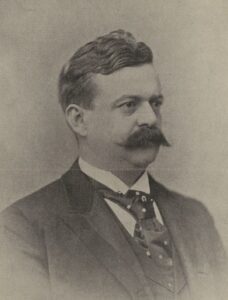
Van Wyck held 2,660 shares of preferred stock and 3,325 shares of common stock. Evidence indicated that Morse had helped him obtain the shares at a favorable price and had helped finance the transaction.
Other politically connected figures also appeared among the company’s investors. They included John F. Carroll, an influential Tammany leader, as well as people connected to the city government and its waterfront administration.
The conflict of interest was difficult to ignore. City officials controlled valuable docking privileges. American Ice depended on those docks to unload its product and maintain its dominance. At the same time, figures connected to the government owned stock in the company benefiting from that control.
Tammany Hall claimed to represent the city’s immigrant and working-class population. Its district leaders built support by helping residents find jobs, obtain food and deal with city agencies.
Now, members of the same political network appeared to be profiting from a company that had more than doubled the price charged to poor households.
The Trust Retreats
The American Ice Company soon began reversing its decisions.
Several weeks after the original increase, it restored the sale of five-cent pieces. After the politically connected stockholdings became public, the household price fell from 60 cents to 40 cents per hundred pounds.
Independent dealers soon began selling ice for approximately 25 cents in much of the city, forcing the trust to lower its price further.
The high prices also encouraged new competitors. Investors organized additional ice companies and expanded artificial-ice operations. The monopoly’s attempt to extract greater profits made entering the business more attractive.
By November, New York was no longer being warned of an ice famine. The market was glutted.
The political consequences lasted longer. Mayor Van Wyck remained in office, but the Ice Trust scandal became one of the defining controversies of his administration. It badly damaged Tammany Hall and contributed to the organization’s defeat in the following mayoral election.
Walk this history: the streets in this article are on the route of our 1,000 Years of New York City History Walking Tour, a private walking tour led by historians and lifelong locals. Private tours run daily on request — $150 for one hour / $300 for two hours per group. To book, visit leshp.org or call (347) 465-7767. Also see our Jewish Lower East Side Walking Tour.

See the Lower East Side for yourself
The Lower East Side History Project leads private walking tours led by native New Yorker historians — just your group, at your pace.
- Mafia Walking Tour
- Jewish Lower East Side Walking Tour
- Jewish Mob Walking Tour
- 1,000 Years of NYC History Walking Tour
- Five Points, Chinatown & Little Italy Walking Tour
Private tours: 1 hour $150 / 2 hours $300 per group. Call (347) 465-7767 or contact us to book.
interesting article…. current similarities abound