
Summary
In the 1890s, Joseph Pulitzer and William Randolph Hearst turned New York City's Park Row into the birthplace of modern media manipulation. Competing for readers among the city's massive immigrant working class, both men built newspaper empires on sensationalism, exaggeration, and outrage -- tactics that drove circulation into the millions, helped push the United States into the Spanish-American War, and gave the world the term "yellow journalism." The story of how two genuine reformers let market competition corrupt their original mission is not a historical footnote. It is the template that cable news, tabloids, and social media have been running ever since.
Two men in the 1890s figured out something that would change American media forever. Before Twitter turned outrage into a product, a century before CNN and FOX “news” built their entire business model around it, they already understood the core logic: anger and fear moves copies, and accurate, unbiased reporting does not move copies nearly as well.
Their names were Joseph Pulitzer and William Randolph Hearst. And what they built is still very much with us today.
The Immigrant Who Started it All
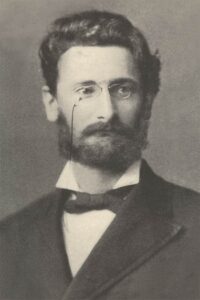
Joseph Pulitzer arrived in America in 1864 as a broke, barely-English-speaking Hungarian Jewish teenager recruited off the streets of Hamburg to fight in the Civil War. After the war ended he drifted to St. Louis, taught himself English, got into politics and reporting, and slowly clawed his way up. By 1878 he owned the St. Louis Post-Dispatch. By 1883, he set his sights on New York.
He bought the struggling New York World from robber baron Jay Gould for $386,000, leveraging everything he owned to do it. The paper was hemorrhaging money. It had about 15,000 readers. Nobody thought it was a good bet.
Here’s what people missed: Pulitzer wasn’t trying to sell newspapers to the people who already bought newspapers. He was going after everyone else. The Irish dockworkers, Jewish garment workers, and Italian laborers. By 1890, when you counted both the foreign-born and their American-born children, roughly four-fifths of New York City’s population had immigrant roots, and every other paper on Park Row treated those citizens as 2nd class. Pulitzer treated them like readers.
Catering to the Masses
Pulitzer sent reporters into tenements and opium dens and police courts and sweatshops, and wrote about the toddler who fell from a five-story rooftop on Orchard Street. He ran stories about the beatings cops handed out in the streets and the the kickbacks pocketed by the bosses at Tammany Hall. He hired the first full-time female reporter in American history, Nellie Bly, and sent her undercover into a women’s asylum on Blackwell’s Island. People who had never bought a newspaper in their lives started buying the World every morning.
The circulation went from 15,000 to over a million. No newspaper in American history had ever done that.
By 1890, Pulitzer built a new headquarters on Park Row, right around the corner from City Hall, that was for a moment the tallest building in New York. There’s a detail to this story that is almost poetic: the hotel he demolished to build that tower was the same hotel that had thrown him out as a penniless immigrant twenty years earlier. He bought it, tore it dowm and replaced it with a skyscraper. At the dedication, he declared the building would be home to a newspaper “forever fighting forms of wrong, forever wedded to truly democratic ideas.”
He meant it, but he also meant to make money.
Newspaper Row
Park Row in the 1880s and 1890s was unlike anything that exists in American media today. Every major paper in the city had its offices within shouting distance of each other, clustered around Printing House Square just north of City Hall. The Herald, the Tribune, the Sun, the Times, the World, all within a few blocks, competing for the same readers, the same stories, the same newsstands. Street vendors screamed headlines at passersby. Newsboys ran through the streets. Extras were printed multiple times a day when something big happened.
The competition was vicious in a way that is hard to fully picture now. These weren’t just competing businesses. They were competing worldviews, competing political machines, competing egos with buildings named after them.
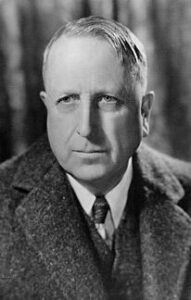
Into this scene, in 1895, walked William Randolph Hearst. Hearst was everything Pulitzer wasn’t. The son of a California mining millionaire, he had basically unlimited money, no patience, and enormous ambition. He bought the struggling New York Journal, cut its price to one cent (half of what the World charged) and immediately started raiding Pulitzer’s staff. Hearst poached editors, reporters, cartoonists, hiring people away with salaries no other publisher could match. He had the resources to simply outspend everyone and he knew it. Hearst studied Pulitzer’s playbook, and decided to run the same game, only louder.
The Birth of “Yellow Journalism”
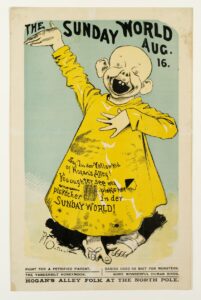
In 1895, a cartoonist named Richard Outcault was drawing a comic strip for Pulitzer’s World called Hogan’s Alley. The strip was set in a fictional Lower East Side tenement yard, populated by street kids, immigrants, and urban chaos. The main character was a bald kid in a yellow nightshirt who never said much but somehow captured something true about life at the bottom of New York. People loved it.
Hearst, in his typical style, simply hired Outcault away. Pulitzer refused to lose the strip and hired another cartoonist to keep drawing it. For a period, both papers were running their own version of the Yellow Kid simultaneously, which was confusing and faintly absurd and probably good for circulation at both papers.
Critics and rival editors started calling both papers “the Yellow Kid papers.” That became “Yellow Kid journalism.” That eventually became “yellow journalism,” a shorthand for the sensationalist, exaggerated, sometimes outright invented style both papers had perfected. The term wasn’t a compliment. But it stuck.
When It Crossed the Line
For most of the mid-1890s, the competition between Pulitzer and Hearst was aggressive but somewhat grounded. Both papers did real investigative work alongside the sensationalism. But starting around 1895, when Cuba began its revolt against Spanish colonial rule, things shifted in ways that are hard to ignore from this distance.
Cuba was a legitimate crisis. The Spanish military’s response to the Cuban uprising was brutal, with civilians forced into work camps, villages burned, and mass starvation spreading across the island. There was a real story to tell. Both papers told it. And then they kept telling it, louder and louder, with more and more embellishment, because anti-Spanish outrage sold papers and they both knew it.
Hearst especially leaned into this strategy. For instance, he ran illustrations of Spanish cruelty that were more graphic than accurate and published accounts of atrocities that were loosely sourced. By design, he refused to print anything from Spanish sources, declaring them untrustworthy, while simultaneously printing his own unverified dispatches. Nothing embodied this cynical approach more than the famous quote attributed to him: ‘You furnish the pictures, I’ll provide the war.’ It captured exactly what was happening.
“You Furnish the Pictures, I’ll Provide the War”
Then, on February 15, 1898, the USS Maine exploded in Havana Harbor, killing 266 American sailors. Nobody knew what actually caused it. An initial investigation was inconclusive. Sober observers, including the Cuban colonial government, concluded it was most likely an internal explosion rather than an attack. The Navy’s own investigation was murky and disputed.
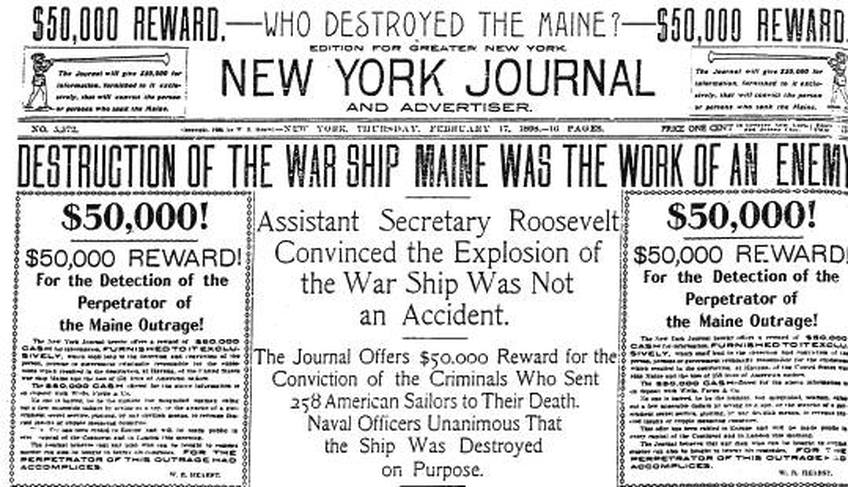
Hearst’s Journal ran the headline: “The Warship Maine Was Split in Two by an Enemy’s Secret Infernal Machine.” Pulitzer’s World wasn’t much better. Both papers published diagrams of the supposed Spanish mine. Hearst offered a $50,000 reward for the “detection of the perpetrator.” The evidence for any of this was essentially nonexistent.
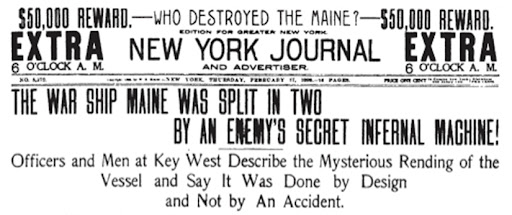
The New York Times, then a much smaller paper than either the World or the Journal, wrote a furious editorial calling it “shameless public lying” and suggested the yellow journals should be suppressed as a public danger. Other papers across the country piled on. None of it mattered. By May, the United States was at war with Spain.
Historians still debate how much the newspapers actually caused the war versus simply accelerating a political situation already heading in that direction. Nevertheless, what’s not really disputed is that Hearst and Pulitzer spent years manufacturing a climate of anti-Spanish hysteria out of a mixture of real reporting, wild exaggeration, and flat invention. Ultimately, when the moment came, that climate made it easy to march into a war on the basis of an explosion nobody fully understood.
The Boycott
As yellow journalism peaked, the established press and civic institutions tried to do something about it. Libraries pulled both the World and the Journal from their reading rooms. Social clubs banned them. The more respectable newspapers ran editorials condemning the whole enterprise.
It didn’t work. The people who read the World and the Journal were not the people who spent their afternoons in social club reading rooms. The boycott didn’t reach them at all. Circulation for both papers went up during the controversy. Indeed, the backlash from polite society served only to make the papers more appealing to the readers who already felt like polite society didn’t speak for them or particularly care whether they existed.
Second Thoughts
The Spanish-American War ended quickly. Cuba was liberated from Spain. The Philippines and Puerto Rico came under American control. Hearst declared victory and moved on. His media empire eventually expanded into radio, film, and magazines, and he became one of the most powerful men in America, widely regarded as the real-life model for Citizen Kane.
Pulitzer went in a different direction. He grew increasingly disgusted with what the circulation war had turned him into, and in his later years he pulled back from the sensationalism and tried to restore some credibility to the World. He endowed what became the Columbia School of Journalism and established the prizes that still bear his name. The prizes Pulitzer created would almost certainly never have been awarded to his own newspaper at its worst. He died in 1911. The World folded in 1931. The Pulitzer Building was demolished in the 1950s to make room for an expanded ramp to the Brooklyn Bridge. Almost nothing physical remains of Newspaper Row.
Their Legacy
The tactics Pulitzer and Hearst invented didn’t disappear when Newspaper Row did. In fact, they paved the way for the bold headlines designed to produce an emotional reaction before you know the facts. This legacy persists in the story that’s technically not a lie but leaves out everything that would complicate the narrative.
The tabloids of the mid-20th century inherited it directly. Cable news rediscovered it in the 1990s and built a whole industry around the finding. Social media took the underlying formula and stripped out the last remaining friction. You just don’t need a printing press anymore.
Walk this history: the streets in this article are on the route of our 1,000 Years of New York City History Walking Tour, a private walking tour led by historians and lifelong locals. Private tours run daily on request — $150 for one hour / $300 for two hours per group. To book, visit leshp.org or call (347) 465-7767.
Eric is a 4th generation Lower East Sider, professional NYC history author, movie & TV consultant, and founder of Lower East Side History Project.
See the Lower East Side for yourself
The Lower East Side History Project leads private walking tours led by native New Yorker historians — just your group, at your pace.
- Mafia Walking Tour
- Jewish Lower East Side Walking Tour
- Jewish Mob Walking Tour
- 1,000 Years of NYC History Walking Tour
- Five Points, Chinatown & Little Italy Walking Tour
Private tours: 1 hour $150 / 2 hours $300 per group. Call (347) 465-7767 or contact us to book.