The Lower East Side is famous because it has served as a gateway for generations of immigrants arriving in New York City. More than almost any other neighborhood in America, it reflects the stories of people who came from around the world seeking opportunity, safety, work, and a better future.
For over two centuries, the Lower East Side has been shaped by Irish, German, Jewish, Italian, Chinese, Slavic, Puerto Rican, Dominican, and Southeast Asian communities, along with many others. Their influence can still be seen in the neighborhood’s buildings, businesses, religious institutions, food, and culture.
America’s Immigrant Neighborhood
During the nineteenth and early twentieth centuries, millions of immigrants arrived in New York through the city’s ports.
Many settled on the Lower East Side because it offered affordable housing and access to jobs. Families often moved into neighborhoods where relatives, friends, or people from the same homeland had already established communities.
Over time, the Lower East Side became one of the most densely populated neighborhoods in the world.
A Neighborhood of Many Cultures
Unlike many historic districts that are associated with a single ethnic group, the Lower East Side has always been a place of constant change.
Irish immigrants arrived in large numbers during the nineteenth century. Germans established businesses, churches, and social organizations. Jewish immigrants transformed much of the neighborhood during the late nineteenth and early twentieth centuries. Italians built thriving communities and businesses. Chinese immigrants expanded eastward from Chinatown. Puerto Rican and Dominican families helped reshape the area during the twentieth century. More recently, immigrants from Southeast Asia and other parts of the world have added new layers to the neighborhood’s story.
Each community left its mark on the Lower East Side.
Famous Tenement Buildings
The Lower East Side is perhaps best known for its tenements.
These apartment buildings housed generations of immigrant families, often under difficult conditions. Entire families sometimes lived in only a few small rooms while working to establish themselves in America.
Today, surviving tenements provide a direct connection to the experiences of millions of New Yorkers.
Orchard Street and Immigrant Business
Orchard Street became one of the most famous shopping districts in New York City.
Immigrant entrepreneurs opened clothing stores, furniture shops, bakeries, restaurants, and countless other businesses. The street attracted customers from across the city and helped many families achieve economic success.
Its history reflects the entrepreneurial spirit that has long defined the Lower East Side.
The Pushcart Markets
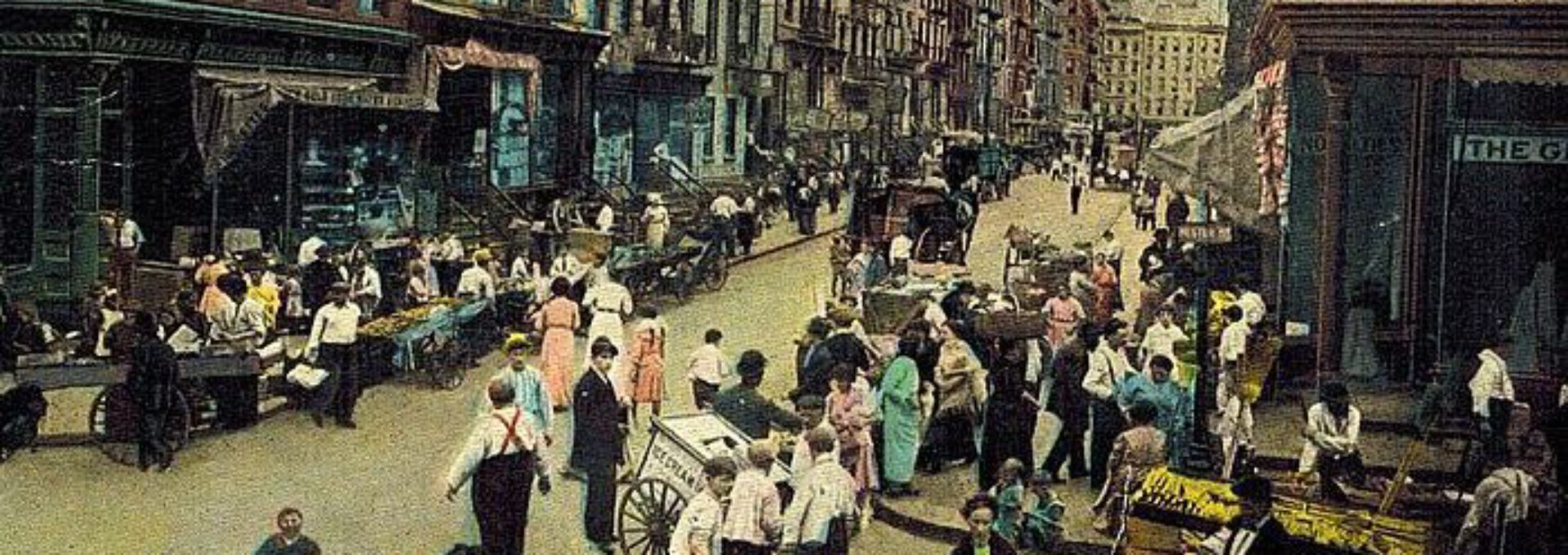
For decades, neighborhood streets were filled with pushcart vendors.
Irish, Jewish, Italian, Chinese, and other merchants sold food, clothing, household goods, and everyday necessities from carts that crowded sidewalks and roadways.
These markets became one of the defining images of immigrant New York.
Labor Activism and Social Change
The Lower East Side was also a center of labor activism and reform.
Workers organized unions, demanded safer workplaces, and fought for better housing conditions. Community leaders pushed for educational opportunities, public health improvements, playgrounds, libraries, and social services.
Many reforms that affected cities across America were influenced by movements that began in neighborhoods like the Lower East Side.
Food That Reflects the World
One reason visitors continue to love the Lower East Side is its food.
Jewish delis, Chinese restaurants, Italian bakeries, Puerto Rican influences, Dominican cuisine, and newer Southeast Asian businesses all contribute to a culinary landscape that reflects generations of immigration.
The neighborhood’s food tells the same story as its buildings: people from many places creating something uniquely New York.
Historic Landmarks
The Lower East Side contains some of New York City’s most important historic landmarks.
Historic synagogues, churches, schools, libraries, markets, parks, theaters, and community institutions provide a window into the lives of the people who built the neighborhood.
Many of these sites remain active parts of community life today.
Why People Visit Today
Visitors come to the Lower East Side because history is still visible here.
The neighborhood offers an opportunity to walk streets where generations of immigrants lived, worked, worshipped, organized, and built communities. Every block contains stories that connect local history to larger themes of immigration, opportunity, resilience, and change.
More Than a New York Neighborhood
The Lower East Side is famous because it represents the American experience.
Its history is not the story of a single group. It is the story of many communities who arrived from different parts of the world and helped build New York City together. Few places in the United States offer a better opportunity to understand how immigration shaped a nation.
Interested in exploring the Lower East Side with an expert guide? Book a tour with Lower East Side History Project: https://www.leshp.org/private-walking-tours/