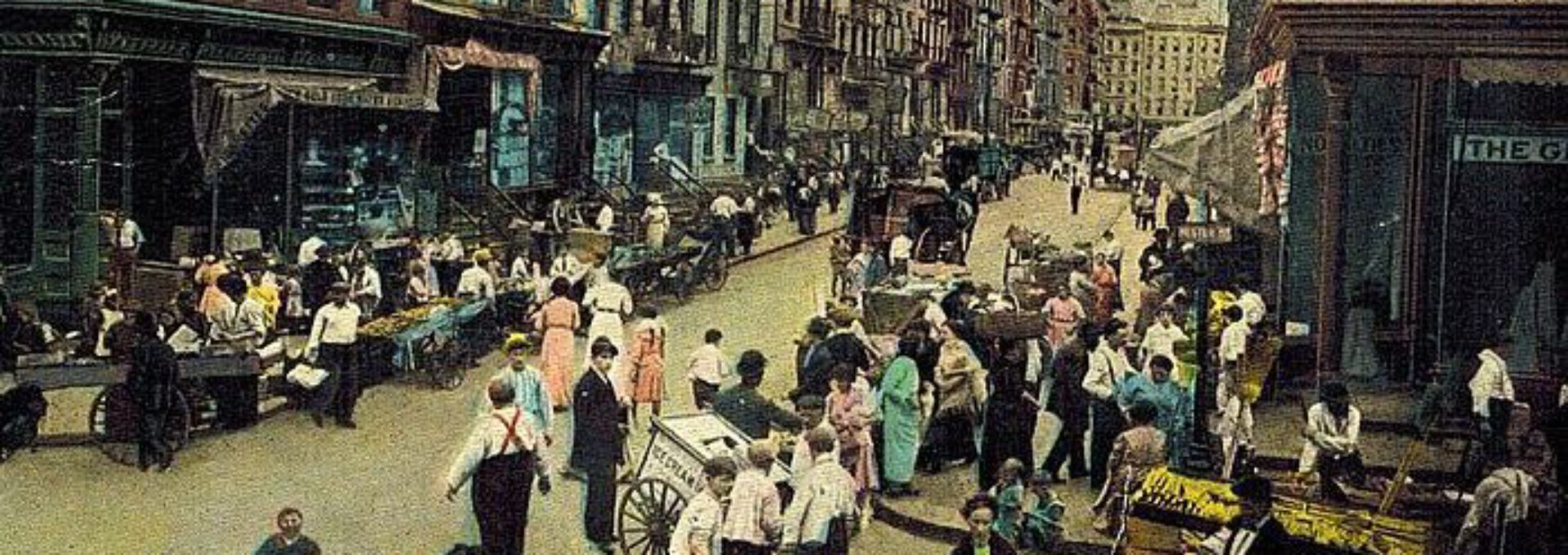
The Lower East Side contains one of the most remarkable collections of historic buildings in New York City. For more than two centuries, immigrants, religious leaders, merchants, reformers, and working-class families shaped the neighborhood, leaving behind an architectural record that still survives today.
From tenement houses and synagogues to markets and civic buildings, these structures help tell the story of how the Lower East Side became one of the most influential neighborhoods in America.
The Eldridge Street Synagogue
Completed in 1887, the Eldridge Street Synagogue is among the most significant religious buildings in New York City.
Built by Eastern European Jewish immigrants, the synagogue reflected the growing confidence and prosperity of a community establishing roots in America. Its restoration transformed it into one of the city’s great preservation success stories.
Today it remains one of the finest examples of nineteenth-century synagogue architecture in the United States.
Historic Tenement Buildings
No building type is more closely associated with the Lower East Side than the tenement.
Thousands of immigrant families lived in these narrow apartment buildings during the neighborhood’s most densely populated years. While living conditions were often difficult, tenements served as the starting point for generations seeking opportunity in America.
Many original tenements still stand throughout the neighborhood.
The Forward Building
The former headquarters of the Jewish Daily Forward is one of the most important surviving landmarks of immigrant journalism.
Completed in 1912, the building housed a newspaper that reached hundreds of thousands of readers and played a major role in shaping political and cultural life among Jewish immigrants.
Its distinctive architecture remains a neighborhood landmark.
Essex Market Building
Public markets have long been part of Lower East Side life.
The historic Essex Market structures reflected efforts to organize the neighborhood’s crowded street vendors and improve public health conditions. While the market has evolved over time, its history remains deeply connected to the immigrant experience.
Seward Park Library
Opened in 1909, the Seward Park branch of the New York Public Library became an important educational resource for immigrant communities.
Libraries provided access to books, language learning, and educational opportunities that helped newcomers adapt to life in America.
The building remains an important civic landmark.
Historic Synagogues
The Lower East Side once contained hundreds of synagogues serving immigrant congregations.
Although many have disappeared, several important examples survive. These buildings reflect the religious and cultural traditions that helped immigrant communities maintain their identities while adapting to life in New York.
Their architecture ranges from modest storefront congregations to grand sanctuaries.
Settlement House Buildings
Settlement houses played a major role in assisting immigrants during the late nineteenth and early twentieth centuries.
These institutions offered education, childcare, recreation, and social services to families adjusting to life in a rapidly growing city.
Many of the buildings associated with these efforts still stand as reminders of an important reform movement.
Historic School Buildings
Education was a pathway to advancement for many immigrant families.
Several historic school buildings survive throughout the Lower East Side, reflecting the neighborhood’s commitment to learning and opportunity.
These structures helped educate generations of New Yorkers whose families arrived from around the world.
Commercial Loft Buildings
The garment industry and other businesses once occupied many of the neighborhood’s commercial loft buildings.
These structures supported the industries that provided employment for thousands of immigrant workers and entrepreneurs.
Today they offer insight into the economic history of the Lower East Side.
Why These Buildings Matter
Historic buildings do more than preserve architectural styles. They preserve stories.
Every surviving tenement, synagogue, library, market, and school helps connect visitors to the people who built communities, raised families, started businesses, and transformed the Lower East Side into one of New York City’s most important neighborhoods.
Exploring these buildings provides a deeper understanding of immigration, urban development, and the history of New York itself.
Interested in exploring the Lower East Side with an expert guide? Book a tour with Lower East Side History Project.