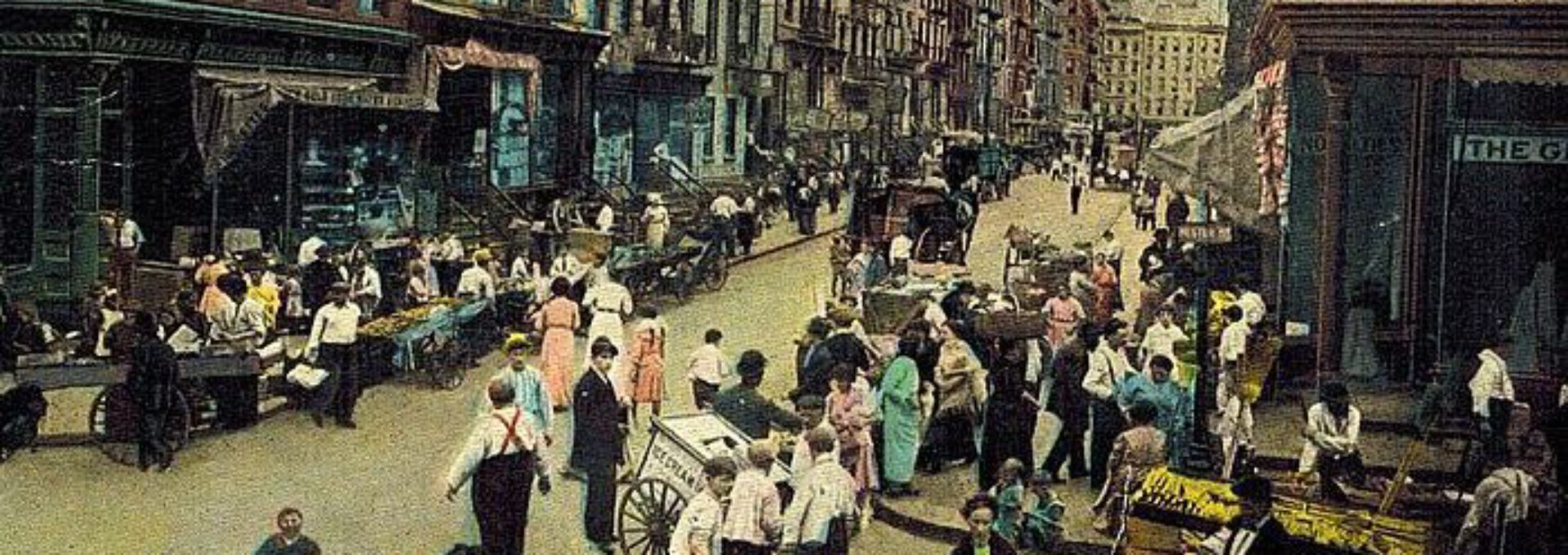
Few streets are more closely associated with the history of the Lower East Side than Orchard Street. Stretching through the heart of the neighborhood, Orchard Street became one of the most important commercial corridors in immigrant New York and remains one of the area’s most recognizable destinations today.
For generations of immigrants arriving in America, Orchard Street represented opportunity, commerce, community, and the promise of a better life.
The Street of the Immigrants
During the late nineteenth and early twentieth centuries, millions of immigrants settled on the Lower East Side. Many lived in crowded tenement buildings and worked long hours in factories, workshops, and small businesses.
Orchard Street became a central shopping district for these communities. Residents could find clothing, household goods, furniture, fabrics, and nearly every necessity of daily life.
The street was often crowded with shoppers, vendors, delivery wagons, and merchants competing for customers.
A Center of Jewish Life
At the height of Jewish immigration to New York, Orchard Street stood at the center of one of the largest Jewish communities in the world.
Yiddish could be heard everywhere. Jewish-owned stores lined the blocks, and the surrounding neighborhood contained synagogues, schools, newspapers, theaters, and social organizations serving immigrant families.
For many newcomers, Orchard Street became one of the first places where they established businesses and built economic stability.
The Pushcart Era
Although pushcart vendors operated throughout the Lower East Side, Orchard Street became closely associated with the bustling street markets that defined the neighborhood.
Merchants sold food, clothing, household items, and countless other products from carts that filled sidewalks and streets.
The markets created a vibrant atmosphere but also led to concerns about congestion, sanitation, and public safety. These debates eventually contributed to the creation of regulated public markets such as Essex Market.
Bargain Shopping Destination
By the early twentieth century, Orchard Street had developed a reputation as one of New York City’s best places to find bargains.
Shoppers traveled from other boroughs to purchase clothing and textiles at prices often lower than those found elsewhere in the city.
The street became famous for its energetic sales culture and competitive merchants.
The Tenement Connection
One reason Orchard Street became so important was its location within one of the most densely populated neighborhoods in the world.
Thousands of residents lived within a few blocks of the street. Customers could simply walk downstairs from their tenement apartments and shop at nearby stores.
This close relationship between housing and commerce helped create the neighborhood’s distinctive character.
Surviving Change
Like much of the Lower East Side, Orchard Street experienced significant changes throughout the twentieth century.
Immigration patterns shifted. Businesses closed or relocated. New communities arrived and transformed the neighborhood.
Despite these changes, Orchard Street retained many physical reminders of its past. Historic buildings, storefronts, and architectural details continue to reflect its role in the neighborhood’s development.
Orchard Street Today
Modern Orchard Street combines history with contemporary culture.
Visitors can still see many of the buildings that witnessed the great immigration era while exploring shops, restaurants, and businesses that serve today’s Lower East Side.
The street remains one of the best places to experience the neighborhood’s unique blend of past and present.
Why Orchard Street Matters
Orchard Street is famous because it tells the story of immigrant New York.
Its buildings, businesses, and sidewalks witnessed the struggles and successes of generations who arrived seeking opportunity. Their efforts helped shape not only the Lower East Side but also New York City and the nation as a whole.
For anyone interested in understanding the history of immigration, commerce, and community in America, Orchard Street remains one of the most important streets in New York.
Interested in exploring the Lower East Side with an expert guide? Book a tour with Lower East Side History Project.