Introduction
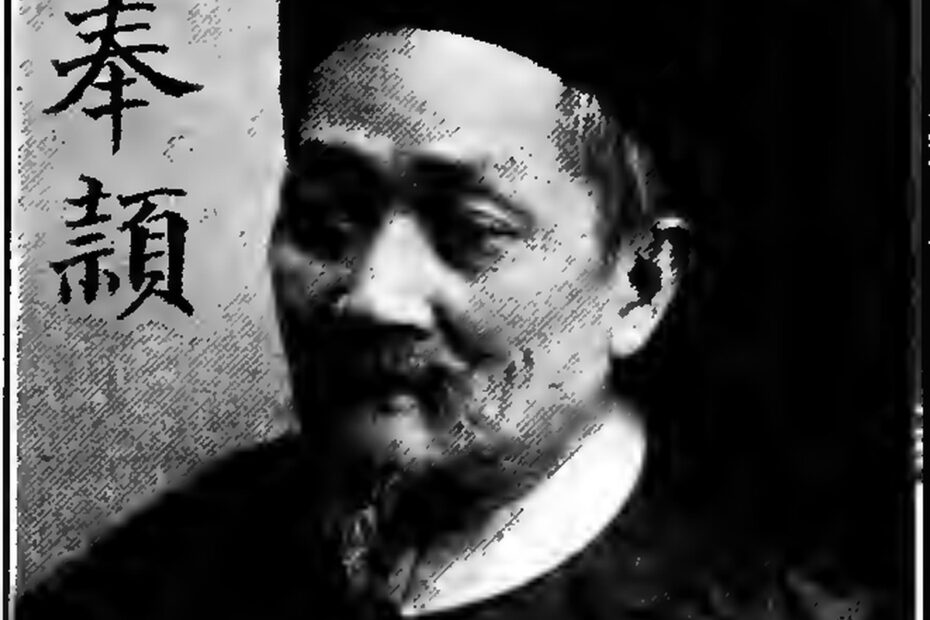
In 1918, New York tea merchant Warner M. Van Norden published Who’s Who of the Chinese in New York. The book is 148 pages long. After a foreword about Chinese farmers in America, it gives short sketches of Chinese men in New York, followed by a business directory of Chinatown.
Van Norden said his ambition was to draw attention to the manner in which Chinese Americans had developed and attained positions of respect and standing in New York City. The sketches were written by leaders in Chinatown, and given, for the most part, in their own language. The portraits were supplied at Van Norden’s request.
The book has 92 individual sketches. The 12 men below were chosen because each one has a portrait in the book, and because together they show the range of Chinatown leadership in 1918: shopkeepers and restaurant men, a noodle maker, a preacher, a school organizer, bank and steamship men, and the older men other residents turned to when a decision had to be made.
All of the facts below come from the book itself. Names, places and addresses are spelled as they appear in the book. Kwang Tung is the book’s spelling for Guangdong province. Hoy San is Taishan. The addresses are the addresses given in 1918. They are historic addresses, not a claim that the same building stands there today.
The book is in the public domain in the United States. This article uses the Cornell University copy, digitized by the Internet Archive.
For the wider story of the neighborhood, see the LESHP Chinatown history page.
CHEW HOUNG
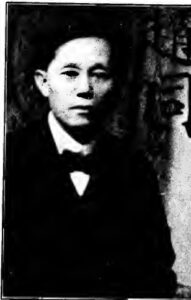
Book page: 25. Address in 1918: 12 Chatham Square.
Chew Houng was born in 1867 in the district of San Wei, in Kwang Tung province. While still quite young, he succeeded his father in business. His father had been a merchant in San Wei.
About 20 years before the book appeared, Chew came to New York. He was an associate member of the firms of Hong Lum Chun and Quong Yuen Sing. About nine years before the book appeared, he opened a noodle factory at 9 Doyers Street. The business was later moved to 12 Chatham Square.
CHIN YOOK
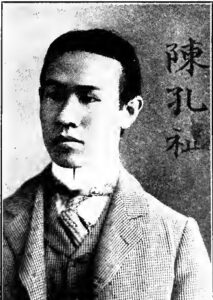
Book page: 28. Address in 1918: 8 Doyers Street.
Chin Yook was born in the district of Hoy San, in Kwang Tung province. He came directly to New York in 1895. He spent four years in high school, and then became associated with Quong Wo Chung.
The book calls him a born manager and organizer. He managed the Garden of Cathay and Jung Sy, both restaurants in New York. At the time the book was written, he was manager for the Quong Wing Shing Company.
CHOY DOW
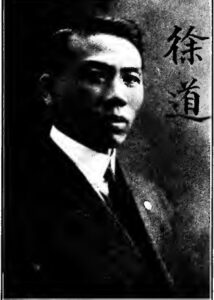
Book page: 29. Address in 1918: 11 Mott Street.
Choy Dow came to the United States from the district of Hock San in 1890. He became affiliated with the Wing Wo Hing Company, now dissolved.
His ability was recognized by the Chip Kee Company, Inc., which elected him president and treasurer in 1910.
CHU FONG LEE
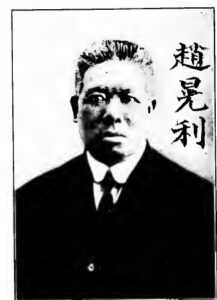
Book page: 30. Address in 1918: 10 Doyers Street.
Chu Fong Lee came to San Francisco in 1875, from the district of Sun Woi, in Kwang Tung province. Six years later he crossed the continent and established a department store in New York.
He managed and operated not less than six different stores in New York. During a recent visit to China, he opened a store in Hong Kong. His present enterprise opened for trade in 1915, under the name of Pong Lee.
CHU FUNG WING, KNOWN AS MON LEE
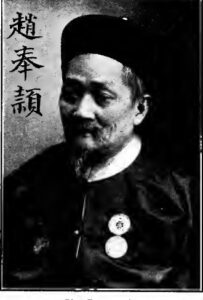
Book pages: 31 to 32. Address in 1918: 37 Mott Street.
Chu Fung Wing was born in 1845, in the village of Har Lou, in the district of Sun Woi, Kwang Tung province. He finished his education at 22, then made his way to the United States, landing in San Francisco in 1867. Two years later, when Chinese residents began to move east, he was one of the first to arrive in New York.
He was associated with five different firms in 48 years in New York, and retired from active business about four years before the book appeared. The book calls him one of the oldest residents among the Chinese of New York.
In 1905, he organized an Association for Terminating Opium, and established an Opium Hospital at 105 Park Street. He was president of the association, and paid for the equipment and the first operating expenses. The Chinese Consolidated Benevolent Association asked for his presence when vital decisions were to be made. In 1914, it voted him President of Arbitration.
The gold medal he wears in his portrait was conferred by Prince Piu Lun of the late dynasty, as the name is spelled in the book. Wu Tang Fang, during his term as minister in the United States, recommended Chu as a candidate for magistrate in his native district in China. The Chinese government conferred the title on Chu three times. He had eight children, five sons and three daughters. His oldest son, Su Gunn, was actively connected with the Nationalist Party.
LEE TO
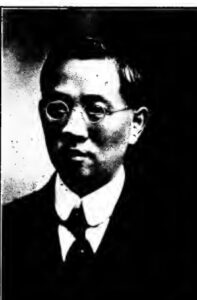
Book pages: 54 to 55. Address in 1918: 53 Bayard Street.
Lee To was born November 11, 1868, in the village of San Har, in the district of Num Huie, in Kwang Tung province. He was educated in the schools of his native district, which, together with Sun Woi, was known as the districts of culture throughout Kwang Tung province.
In 1887, he crossed the Pacific and landed in San Francisco. He became a Christian there in 1890. Returning to China, he entered the Theological Department of the Baptist Academy at Canton in 1892. He studied in the Bible Teachers Training School in New York in 1907. His first appointment was under the American Baptist Home Mission Society, and his duties took him to various cities throughout the United States. He was ordained July 10, 1903, at the Spokane Baptist Convention.
The book opens his sketch by saying that, in the New York colony of Chinese, there is a man speaking the doctrines of Jesus Christ, Sunday after Sunday, and day after day.
LEE YICK DEEP
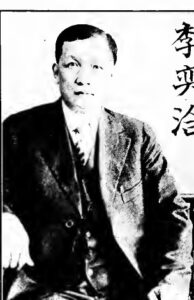
Book pages: 55 to 56. Address in 1918: 32 Mott Street.
Lee Yick Deep was born in 1864, in the district of Hoy San, in Kwang Tung province. At 12, he came to the United States. For many years he lived in the West, but New York finally drew him east.
In 1891, the enterprise of Quong Yuen Sing was organized under his hand. He acted as business manager for the firm from the day it opened for trade. The Chinese School of the Chinese colony in New York began in 1908. Its organization and supervision depended entirely on Lee. He took on the duties of president, secretary and treasurer of the School Board.
Lee also raised money for Canton Christian College. Contributions through his efforts totaled more than 11,000 dollars, and he was treasurer of the New York depositary for the funds. The Chinese Merchants Association elected him president for 1914. The Ning Young Railroad of the Hoy San district delegated its New York representation to Lee, and he was also a director of the company.
LIANG JOU CHONG
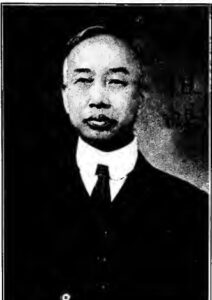
Book pages: 61 to 62. Address in 1918: 38 Mott Street.
Liang Jou Chong was born in 1862, in the village of Mark Hong, in the district of Hoy San, in Kwang Tung province. In 1880, he came to the United States. After spending many years in various cities, he decided New York was the best place to live.
In 1899, he organized the firm of Quong Yee Wo, and was its manager ever since. Liang gave much time to the welfare of Chinese residents in New York and in China. He was a follower of Confucius, whose principles he had studied in his early days in China. With Dr. Chen Huan-Chang, in 1907, he organized the Confucius Society in New York. A Confucian School was formed at the same time.
He also furthered the Ning Young Railroad Company of China among his countrymen. In 1915, the Public Loan Department of China empowered him to float the Public Loan of China among Chinese residents in the United States. The same year, he was auditor for the Chinese Consolidated Benevolent Association. The Chinese Merchants Association elected him president for 1916-17. He represented the China Mail Steamship Company of San Francisco from 1916.
MOY KWON KIE
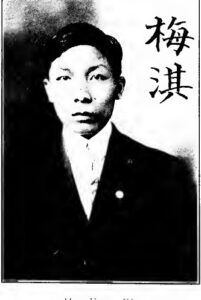
Book page: 70. Address in 1918: 36 Wall Street.
Moy Kwon Kie was a son of Moy S. Tighe, below. He was born in 1891, in the district of Hoy San, Kwang Tung province. He came to the United States in 1907, and studied for several years in the public schools of New York.
The Hong Kong and Shanghai Bank employed him for several years. He was married, and had three children.
MOY S. TIGHE
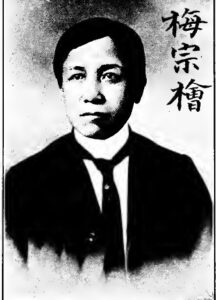
Book pages: 71 to 72. Address in 1918: 28 Mott Street.
Before coming to the United States in 1879, Moy S. Tighe was a teacher in a school for boys in Canton. For more than 20 years, he was a merchant with Sun Kwong On.
He was chairman of the Chinese Hospital Committee, which lasted for a very short time and disbanded for lack of patients. He was business manager of the Chinese Cemetery Association, which looked after the Chinese sections in Evergreen and Cypress Hills cemeteries. He was also treasurer of the Chinese Consolidated Benevolent Association, treasurer of the Ning Young Society, and secretary to the Moy Society. He had one son and one daughter.
TOM HING MING
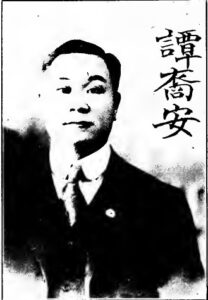
Book page: 78. Address in 1918: 16 Mott Street.
Tom Hing Ming was born in 1868, in the district of Hoy San, in Kwang Tung province. At 16, he came to San Francisco and found work as a general assistant in a store. When he was 22, he came to New York and entered the firm of Ye Hing.
In 1914, with several other Chinese merchants, he organized the firm and opened the store of Quong Mee Yuen. He was a stockholder in a syndicate owning and operating numerous out-of-town restaurants. He was also a member of a firm conducting a poultry business on Chrystie Street.
TOM KOY MAN
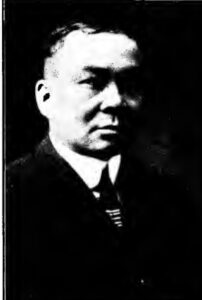
Book pages: 79 to 80. Address in 1918: 32 Mott Street.
Tom Koy Man was born in 1870, in the district of Huie Ping, Kwang Tung province. After leaving school, he went to the city of Dick Hoy, in the district of Hoy San, and opened a department store, which he operated until 1903.
That year, he came to New York and became an associate merchant of Quong Yuen Sing. He visited China in 1908, and remained two years. He resumed his former position on his return to New York in 1910.
Source
All profiles and portraits are from Warner M. Van Norden, Who’s Who of the Chinese in New York (New York, 1918). The book is in the public domain in the United States. The copy used here is the Cornell University copy, digitized by the Internet Archive, identifier cu31924023561685.
Page numbers above are the printed page numbers in the book.
The book is also available to read on Google Books.
See the Lower East Side for yourself
The Lower East Side History Project leads private walking tours led by native New Yorker historians — just your group, at your pace.
- Mafia Walking Tour
- Jewish Lower East Side Walking Tour
- Jewish Mob Walking Tour
- 1,000 Years of NYC History Walking Tour
- Five Points, Chinatown & Little Italy Walking Tour
Private tours: 1 hour $150 / 2 hours $300 per group. Call (347) 465-7767 or contact us to book.